
New Research on Improving Adolescent Mental Health and HIV Medication Adherence from Dr. Alissa Davis
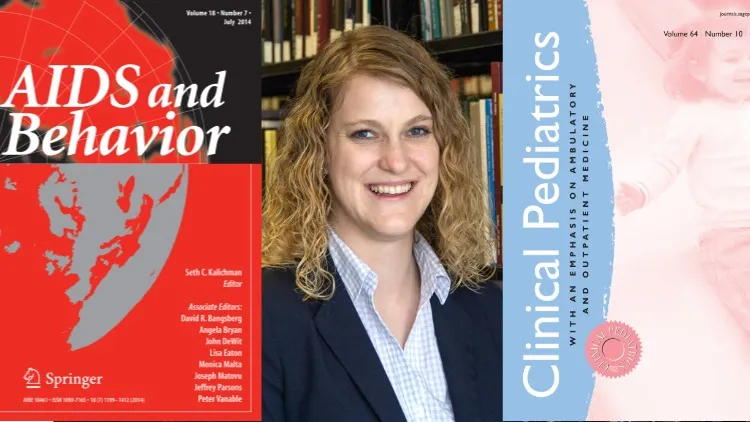
Columbia School of Social Work Associate Professor Alissa Davis has two recent publications, which explore how to address the adolescent mental health crisis in the United States and increasing adherence to HIV medication among people who inject drugs in Kazakhstan.
"Evaluating the Feasibility and Acceptability of a Mobile Mental Health Intervention for Adolescent Depression and Anxiety," published in Clinical Pediatrics, addresses the possibility of alleviating the adolescent mental health crisis with the use of mobile mental health apps. The research team assessed the feasibility and acceptability of the Wysa app (a commercially available app containing cognitive behavioral therapy-based digital modules and an artificial intelligence-based conversational agent) among 44 13- to 18-year old adolescents. They found that app uptake was high (77%), and over three-quarters of participants would recommend the app to others. Participants used the app a median of 9 times over a three-week period.
"In the absence of sufficient mental health resources, mobile mental health apps may be a useful tool to help adolescents," said lead author Alissa Davis. "We found high feasibility and acceptability of the app among youth in our study. While this study was not adequately powered to determine the effectiveness of the app, we plan to conduct a future, larger study to more thoroughly evaluate the effects of the app on adolescent mental health."
In "A Dyad-Based Intervention to Improve Adherence to Antiretroviral Therapy among People with HIV who Inject Drugs in Kazakhstan: Results of a Randomized Controlled Trial," published in AIDS & Behavior, Davis and her co-authors tested the effectiveness of a social support intervention on HIV medication adherence in Kazakhstan.
Kazakhstan has one of the fastest-growing HIV epidemics in the world, concentrated in people who inject drugs (PWID) with suboptimal HIV medication adherence. Social support has potential to improve medication adherence, but few social support interventions exist for this population. By testing the impact of a dyad-based social support intervention on improving HIV medication adherence among PWID with HIV and their treatment support partners (66 dyads), the research team found that PWID receiving the intervention who had a partner with HIV had a significant improvement in medication adherence than PWID receiving standard of care who had a partner with HIV. They did not observe any significant differences between arms for PWID who had partners without HIV (adherence increased over time in both arms).
Though there were improvements in reported medication adherence, a third of PWID with HIV in both arms remained virally unsuppressed after six months. High HIV medication adherence does not always correspond to viral suppression, particularly if drug resistance is present, which was not part of this study. Also, detecting differences in sustained viral suppression often requires longer follow-up periods. To better understand these topics, further research with larger sample sizes, a longer follow-up, and drug resistance testing is needed.
"Our findings indicate the importance of social support for PWID with partners with HIV in particular. For these individuals, improved adherence was only observed among those receiving the intervention, suggesting that PWID in seroconcordant partnerships may face greater vulnerability and be in particular need of social support," said Davis, the lead author. "Notably, individuals receiving the intervention who had partners with HIV had a sustained average HIV medication adherence rate higher than 80%, which is associated with increased viral suppression."