
Academic and Community Experts Explore Current and Future Roles for AI as a Healthcare Tool
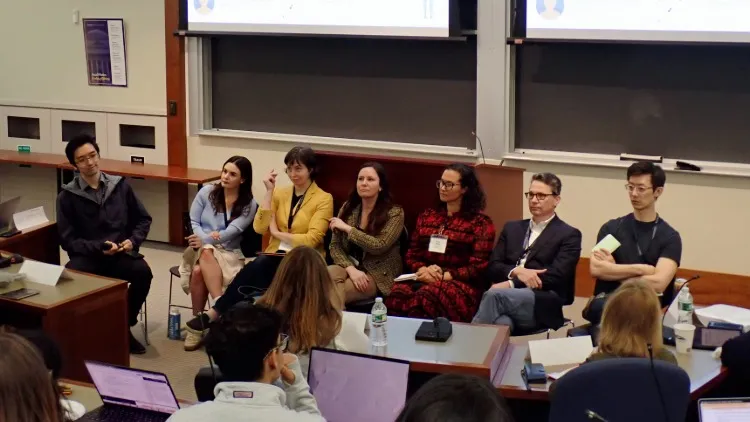
The second session in the Generative AI in Personal Health: Opportunities, Challenges, and Future Directions series took place on May 14, 2026, featured experts in medical humanities, nursing, data and media, medicine, and more. Joined in the audience by faculty, staff, and students from Columbia University and beyond, they spent the morning delving into complex questions about the impact and accountability of AI models, what role AI tools can have in the healthcare system, and how to engage patients and communities in development.
The workshop, AI as a New Health Information Expert, was convened by AI for Social Good and Society (AI4SGS), Columbia School of Social Work, and Columbia’s Department of Biomedical Informatics. The panelists were Timothy J. Crimmins, MD, Chief Medical Information Officer for Columbia Doctors; Eugene Wu, PhD, Associate Professor of Computer Science; Alexis Walker, PhD, Assistant Professor of Medical Humanities and Ethics; Meghan Reading Turchioe, MPH, RN, Assistant Professor of Nursing; Susan McGregor, MA, Research Scholar at Columbia’s Data Science Institute; and Juanita Hotchkiss, MSW, Director of Community and Incarcerated Programs for the Ulster County Sheriff’s Office.
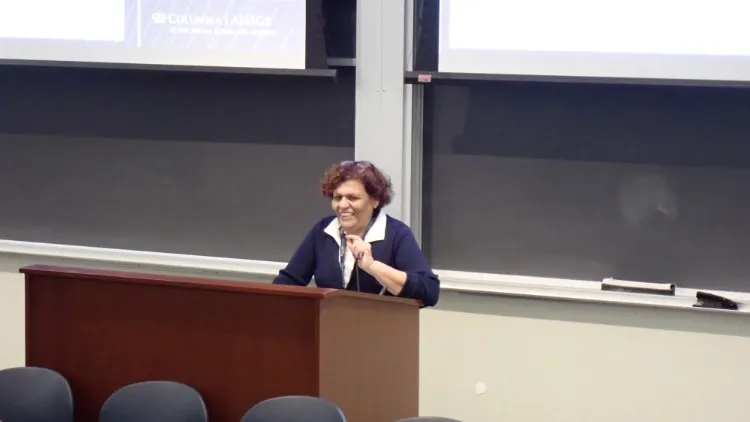
AI4SGS’s Dr. Nabila El-Bassel provided the framework for the workshop, and she opened the session by summarizing the current state of AI in healthcare. AI is already present throughout the healthcare system, as regulated medical devices, clinician-facing tools, and patient-facing chatbots. With almost 30% of US adults using AI tools or chatbots for medical information in the past year, and more than 1,400 AI-enabled medical devices authorized by the FDA in 2026, it is clear that AI is also deeply integrated into healthcare.
The panelists’ wide range of backgrounds and expertise allowed them to approach complex questions about AI in the healthcare system from many angles. Discussing the issue of trust in the healthcare system, Dr. Crimmins observed early on that patients use AI on their own but are skeptical of physicians using it, perhaps because they expect the physician to already have the expertise that the AI tool could provide. Dr. Walker observed that many people already had mistrust of the medical system, and that trust involves not just expertise but relationships, which the use of AI tools can shift.
Panelists also raised the issue of liability with AI tools in healthcare, with Ms. Reading Turchioe asking, “What does AI mean for our liability? What if AI is wrong? What if you choose to ignore it? There’s no case law about it. It’s an open legal and ethical question.” Dr. Crimmins pointed out that in addition to reliability concerns, the companies creating AI tools usually step back from accountability for outputs, creating the potential for safety issues and gaps in equity.
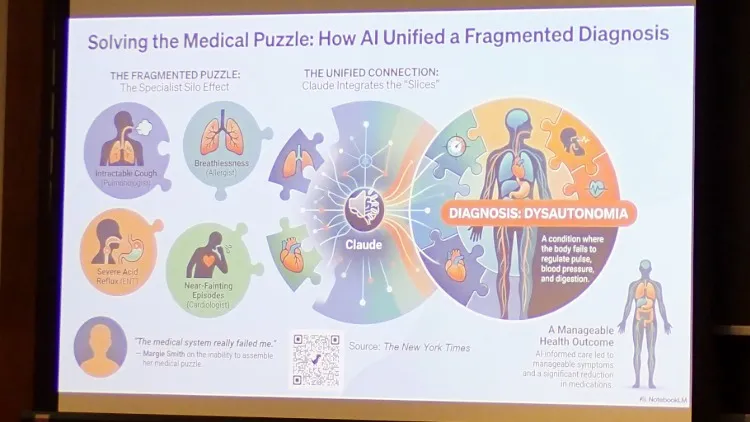
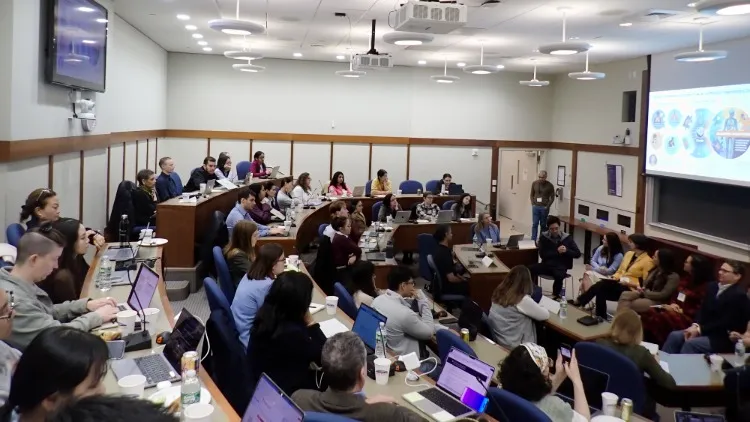
One major theme emerged during the discussion of a case study about a woman who used AI to help unify symptoms being treated by disparate specialists: AI as a tool to address access and fragmentation challenges in the healthcare system. Ms. Hotchkiss brought up the possibility of using AI to increase the options available in communities with limited access to medical resources, and that people want a convenient one-stop shop for medical information rather than a primary care provider who just refers them to specialists. Dr. Wu raised the issue of reliability, and the way that AI can increase uncertainty with unreliable information. Ms. Reading Turchioe echoed this point, saying that, “Generative models are very good at building trust. They pass their information off as truth, even if it isn’t.”
Finally, Ms. Hotchkiss and Ms. McGregor both emphasized the importance of community engagement and co-design for building AI tools, in order to ensure that they meet the actual needs of the communities they’re being built to serve. “If you talk to people they will tell you their problems and how they’d like to have them solved. In engineering we end up solving very tiny problems at the end of the pipe. There are fascinating research problems to be had if you go talk to people you don’t usually talk to. We can learn so much by just talking to people,” said Ms. McGregor.
The Generative AI in Personal Health workshop series will continue in Fall 2026.