
Fentanyl Test Strip Users Report More Overdose Risk Reduction Behaviors, Multisite Study Finds
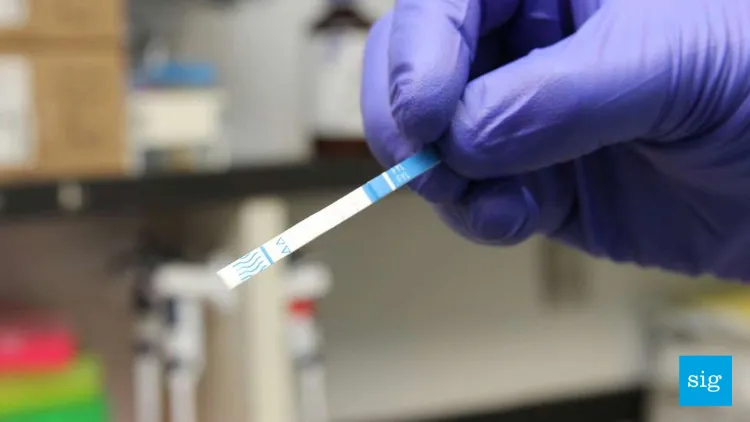
In a multisite study of risk reduction behaviors among people who use drugs across three states, researchers found that people who reported regularly using fentanyl test strips were significantly more likely to engage in other behaviors that mitigate the risk of overdose. The full results were published in “Fentanyl Test Strip Use and Overdose Risk Reduction Behaviors Among People Who Use Drugs,” in JAMA Network Open.
More from the HEALing Communities Study
Fentanyl test strips, introduced as a harm reduction strategy, allow individuals to test their drugs for the presence of fentanyl, which is now present in many street drugs. In the study, people who use drugs reported their use of fentanyl test strips, and how often they engaged in eight other risk reduction behaviors: having someone else nearby while using drugs, having naloxone nearby, testing the strength of your drugs, using drugs slowly, asking someone to check on you, watching someone else use the drugs first to see their reaction, throwing out drugs that weren’t what you expected, and using drugs with a method other than injection. Use of fentanyl test strips was associated with more frequent use of all but one of those risk reduction behaviors. The sole exception was using a method other than injection for drugs.
Designed as an ancillary study connected to the HEALing Communities Study, this research expands the existing literature by examining the association over four weeks with follow-ups, rather than at a single point in time. 732 participants who reported using drugs were recruited from 14 partner organizations that distribute fentanyl test strips in Kentucky, New York, and Ohio.
With the pervasiveness of fentanyl in the street drug supply, and its role in driving the opioid overdose crisis in the United States to unprecedented levels, fentanyl test strips have become an important harm reduction tool. This research demonstrates that fentanyl test strips have an important role in a comprehensive harm reduction strategy, but also indicates that they are not sufficient on their own to reduce overdose rates. Nonetheless, as a valuable tool, it is vital to ensure that fentanyl test strips are distributed widely, especially in Black, Indigenous, and Latinx communities that have been disproportionately impacted by the opioid overdose crisis.