
Experts and Community Leaders Examine the Promise and Risks of AI Companions in Healthcare
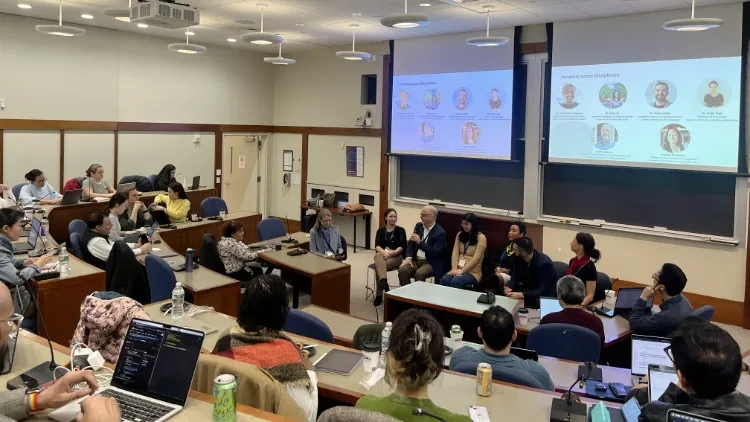
On March 27, 2026, faculty from social work, computer science, informatics, engineering, mental health, psychiatry, and philosophy joined community members for a timely discussion on the opportunities, risks, and ethical questions surrounding AI companions in healthcare. Convened by Columbia’s Data Science Institute, AI for Social Good and Society, and the AI at Vagelos College of Physicians and Surgeons initiative, the event brought together faculty, staff, and students from across Columbia University.
The event, titled “AI Companions: Opportunities, Challenges, and Future Directions,” was the first in a four-part workshop series. Panelists included Courtney D. Cogburn, PhD, associate professor of social work; Zhou Yu, PhD, associate professor of computer science; Ryan Sultan, MD, assistant professor of clinical psychiatry; Katja Vogt, PhD, professor of philosophy; Steve Kilburn, substance use and addiction services coordinator for the Chautauqua County Health Department; and Juanita Hotchkiss, director of community and incarcerated services at the Ulster County Sheriff’s Office.
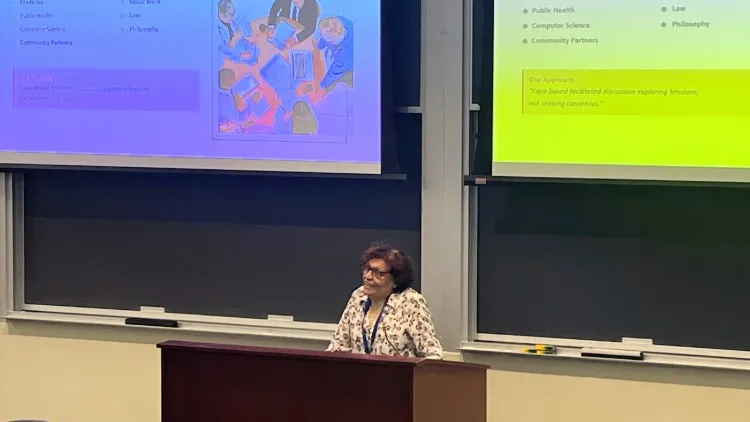
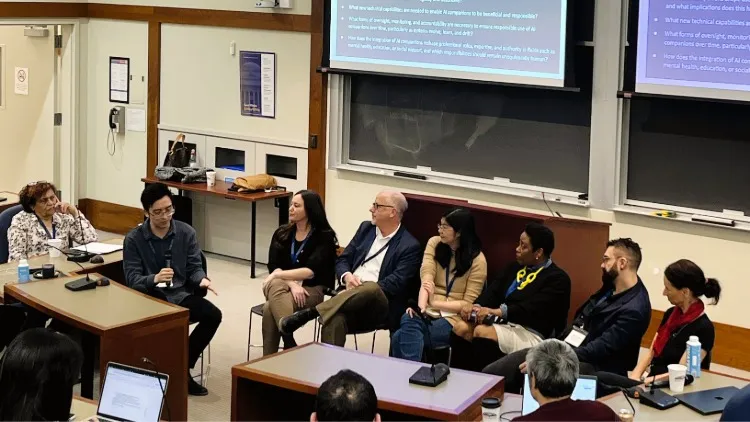
The range of disciplines represented on the panel and in the audience sparked a wide-ranging conversation about how people engage with AI both as a companion and as a healthcare tool. Responding to a question about balancing the perception of empathy with the understanding that AI is artificial, Vogt said, “I question the premise that we can all know this is a machine. When you talk with an AI companion, you enter a fictional world. If everything goes well, you can enter and exit at will. But if you can’t do that, you have a problem.” Kilburn added, “Some people won’t be able to move in and out of that fictional world.”
Panelists also explored the implications of AI entering spaces where people may be especially vulnerable. “I’m not even sure that I’m comfortable with companionship yet,” Sultan said. “You build a trust, and putting that on an AI without a clear agenda makes me uncomfortable.” The discussion examined what it means for something to be a companion, the risks of chatbots optimized for profit, and the importance of ensuring AI tools are attentive to the structural factors that shape health and mental health outcomes.
From a technical perspective, Yu emphasized that AI systems remain difficult to control and predict. “The inputs are not predefined, which makes it impossible to do exhaustive testing,” she said. “There’s huge discrepancies between different companies and LLMs because of their different goals.” Across disciplines, panelists underscored the need for guardrails, the importance of using AI as a tool rather than an intervention, and the value of learning from one another across fields.
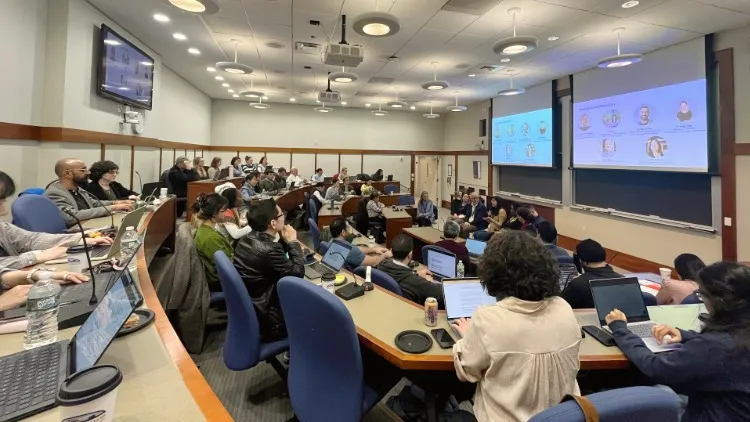
Looking ahead, Cogburn stressed the importance of shaping the future of AI intentionally and collaboratively. “We need to be thinking decades ahead in terms of shifting practices,” she said. “If we don’t carve out a space for ourselves to participate in designing the future, it’s just going to arrive without our input.” Hotchkiss echoed that theme, adding, “It’s crucial that when building anything, everyone has a voice at the table. We are building this for someone and they have to be involved.”
The next session in the Generative AI in Personal Health workshop series will be held on May 14 and will be focused on AI as a New Health Information Expert.