
Assessing the Total Costs of the HEALing Communities Study Provides Insight for Future Comprehensive Opioid Overdose Interventions
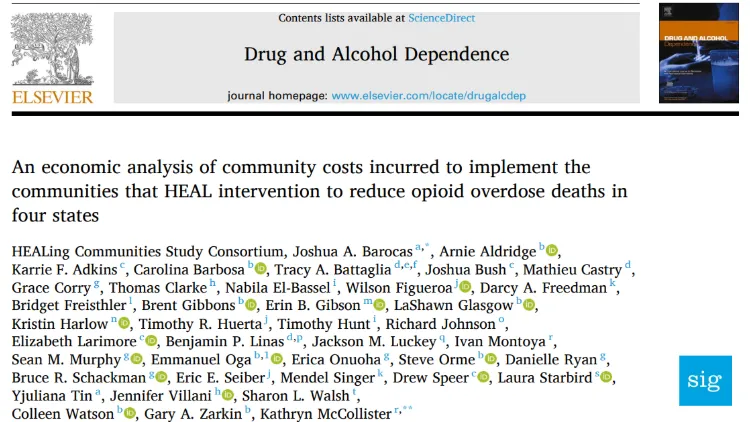
Researchers on the HEALing Communities Study, the largest community-based overdose prevention study ever conducted, have completed a thorough analysis of the economic cost of implementing the Communities That HEAL (CTH) intervention. Implemented in 67 communities in four states, the CTH includes community engagement, evidence-based practices, and communication campaigns. The total cost across all communities over 30 months was more than $63 million, with an average cost per community of $1.9 million. Broken down by the different components of the study, the average cost per community of community engagement was $1,030,405; the average cost per community of evidence-based practices was $668,030; and the average cost per community of communication campaigns was $235,915.
The findings, published in “An economic analysis of community costs incurred to implement the communities that HEAL intervention to reduce opioid overdose deaths in four states,” also incorporate time costs for community members and the opportunity costs of those community members’ time. A working group within the study developed tools to comprehensively track the resources used to implement the CTH, including translating data about time costs into dollars. Including time costs and data obtained from community members about unreimbursed expanses as well as from research faculty and staff allows the final numbers to be truly reflective of the cost to communities of implementing a comprehensive, data-driven opioid overdose prevention intervention.
The HEALing Communities Study examined the implementation of the CTH in 67 communities in New York, Kentucky, Massachusetts, and Ohio, with a combined population of more than 4.4 million people. The CTH has three major components: a menu of evidence-based opioid overdose prevention strategies including opioid education and naloxone distribution, medication for opioid use disorder, safer prescribing, and more; community engagement to facilitate data-driven selection from the menu of evidence-based practices and implementation; and communications campaigns to decrease stigma about opioid use and treatment, and increase demand for the chosen practices. Findings from the study include a 15% decrease in non-fatal opioid overdoses, a 104% increase in naloxone distribution, and an overall reduction in community stigma toward opioid users.
With more than 80,000 opioid overdose deaths in the United States in 2023, it is critical for communities to understand not just what they can do to prevent future overdoses, but how much those interventions cost, both in direct spending and in the opportunity cost of directing community members’ attention to them and away from other pressing issues. This comprehensive breakdown of the cost of the CTH as a whole, and the cost of each portion of it, gives communities around the country a valuable tool to use in determining their priorities as they attempt to combat the opioid epidemic.