New Publication on the Mental Health of Clinic-Attending Syrian Refugee Women in Jordan

By
Eleni Vlachos
Mohamad Adam Brooks
January 18, 2022

A new publication explores the associations between social ecological risks factors and mental health symptoms.

A new article, Mental health of clinic-attending Syrian refugee women in Jordan: associations between social ecological risks factors and mental health symptoms, was published in BMC Women's Health on January 8th. The article is a result of research conducted through Project ASPIRE (Advancing Solutions in Policy, Implementation, Research and Engagement for Refugees).

Background

Per the article, more than 6.7 million Syrian refugees have been forcibly displaced since the 2011 Syrian civil war. Jordan is one of the largest, per capita, refugee hosting countries in the world. Due to violence associated with war and displacement, Syrian refugees "face an increased risk for mental health conditions." Women face additional risk "as they are at greater risk of sexual, physical, and psychological abuse."

The mental health of refugee women is impacted by individual, interpersonal, community, and societal level risk-factors; these, the authors hypothesized "will be associated with depression, anxiety, and post-traumatic stress disorder (PTSD) symptoms."

The study team used the social ecological model to examine these risk factors "associated with self-reported mental health symptoms among clinic-attending Syrian refugee women in Jordan."

Our findings suggest that a multilevel approach to intervention is needed to reduce mental health symptoms. Mandatory screening tools must be incorporated into healthcare agencies to screen for mental health and intimate partner violence.

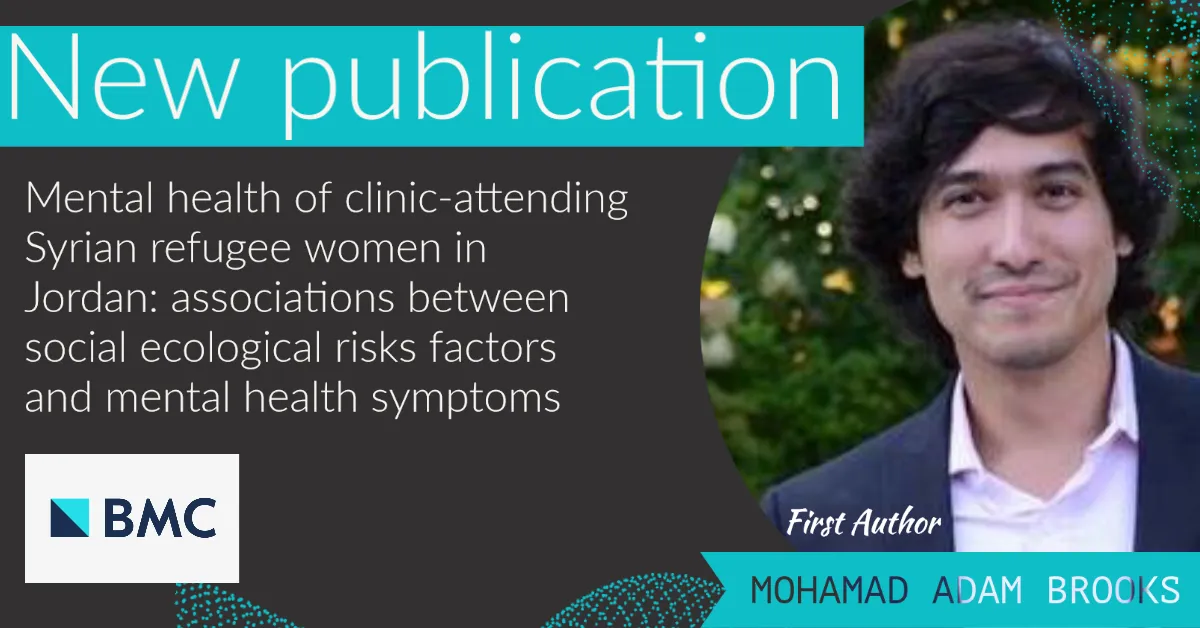
First author Mohamad Adam Brooks

First author Mohamad Adam Brooks shared more about the significance and implications for the study:

Significance of the study

"We found intimate partner violence and post-migration stressors to be consistently impactful with all mental health outcomes (depression, anxiety, and PTSD). We also found intimate partner violence resulted in the largest odds increase for all mental health outcomes."

Implications of findings

"Our findings suggest that a multilevel approach to intervention is needed to reduce mental health symptoms. Mandatory screening tools must be incorporated into healthcare agencies to screen for mental health and intimate partner violence."

Mr. Brooks continues: "In addition to direct mental health intervention by a clinician, case workers can help reduce post-migration stressors, with policy makers advocating for policy-level changes, to address the mental health of Syrian refugee women."

The authors of the publication were Mohamad Adam Brooks, Melissa Meinhart, Luma Samawi, Trena Mukherjee, Ruba Jaber, Hani Alhomsh, Neeraj Kaushal, Raeda Al Qutob, Maysa’ Khadra, Nabila El-Bassel and Anindita Dasgupta.

Read the publication.

Learn more about Project ASPIRE.

Follow SIG's work by signing up for our monthly newsletter or following us on Twitter.