Bridging Data Science and Social Impact: MA Mentored Research at Columbia’s Social Intervention Group
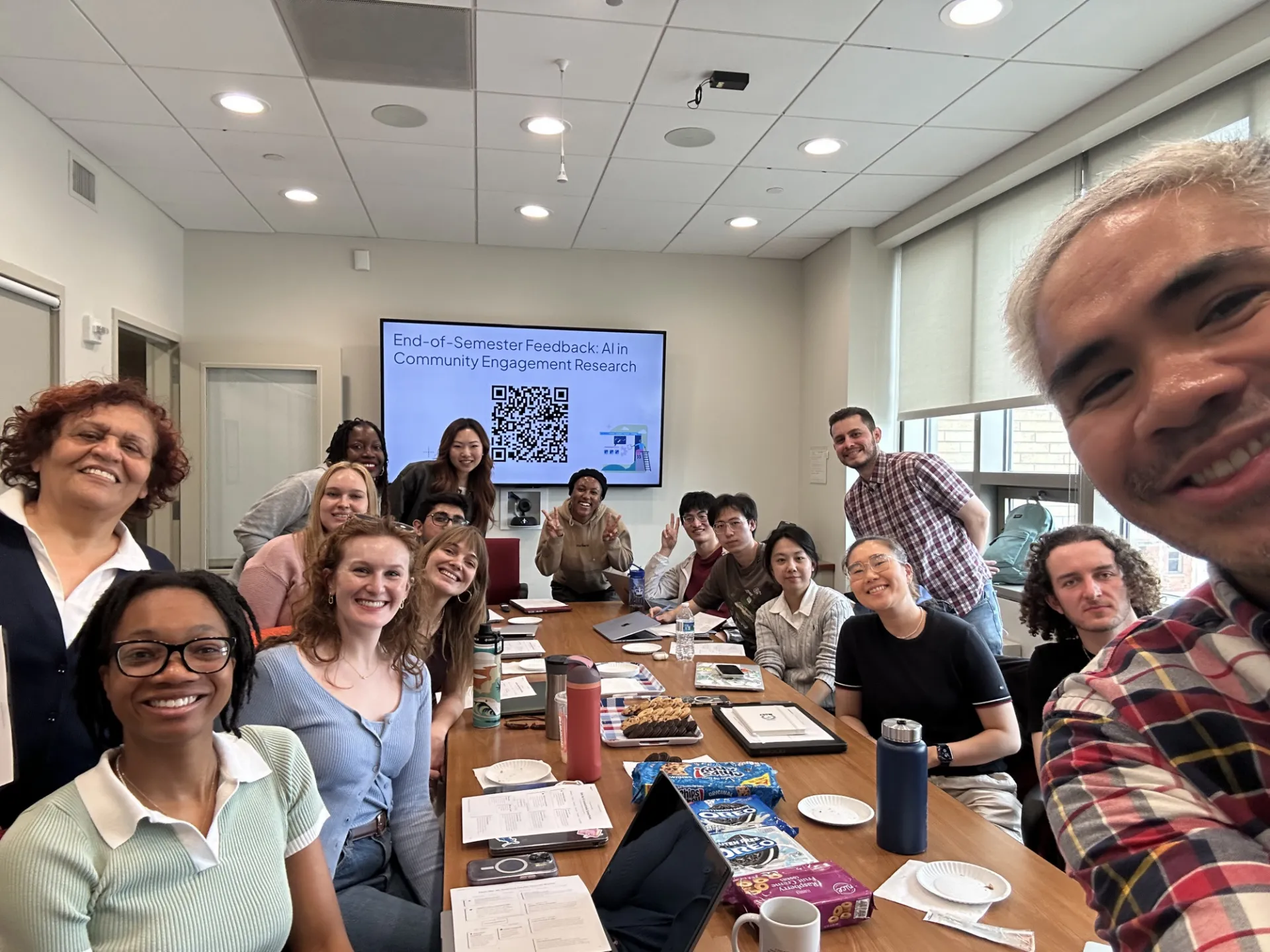
Through an innovative inter-disciplinary partnership, the Social Intervention Group (SIG) and the Department of Statistics creates a collaborative, immersive research experience. The Department of Statistics MA Mentored Research program gives its graduate students the opportunity to join active research projects at SIG led by faculty and research scientists at the School of Social Work.
This work builds on work between University Professor Nabila El-Bassel, who is the SIG Director, and Professor Tian Zheng, who was the former chair of Statistics. Their innovative work on AI for Social Good and Society, a university-wide initiative, as well as the creation of the PRISM-Capabilities framework for applying AI to Community-Engaged Research. Alongside its leaders and mentors, SIG Research Analyst Eric Aragundi and SIG Chief of Staff James David provide students with direct, day-to-day guidance on applying advanced analytics and AI research tools to implementation science as well as research related to substance-use and intimate partner violence.
Mentors work closely with students to cultivate essential research competencies, including:
- Interdisciplinary Research Collaboration: Working alongside researchers across statistics, data science, social work, and implementation science to address complex, real-world research questions.
- Applied Machine Learning & NLP: Processing qualitative and unstructured data (such as coalition meeting transcripts and intervention feedback).
- Ethical AI Frameworks: Designing human-centered AI evaluation tools and prompt structures (e.g., using frameworks such as PRISM-Capabilities) to ensure automated health tools do not perpetuate bias.
- Research Insights & Communication: Translating complex quantitative findings and computational findings into clear actionable insights for interdisciplinary researchers,domain experts, social workers, and community advisory boards.
Each term, master's students in the Department of Statistics review approved faculty projects and apply to join research teams that align with their technical and career goals. Through this competitive application process, our project selected motivated M.A. students to join our cohorts, embedding them directly into SIG's interdisciplinary research pipeline.
Mr. Aragundi shared his thoughts on the program: "As a Research Analyst and alumnus of the M.A. in Statistics program, I find it especially meaningful to work with students who are now progressing through the same program I once completed. This experience gives me the opportunity to help students bridge the gap between statistics, data science, and machine learning and fields such as social work and implementation science. Through this interdisciplinary collaboration, students can expand how they understand the application of quantitative and computational methods while developing and strengthening their research skills before graduation.
In Fall 2026, we welcomed our second cohort of M.A. students, including two returning students from our first cohort. It has been particularly rewarding to see students continue to grow as researchers while contributing to work at the intersection of AI and society. We are excited to continue strengthening our collaboration with the Department of Statistics and creating opportunities for more students to participate in interdisciplinary, applied research.
Looking ahead, we are also preparing to welcome students through the new extended research residency program. We currently anticipate three students joining us in the coming semester, each completing an extended weekly research commitment of a minimum of 30 hours of research. Through their participation, students will gain deeper exposure to the research process while contributing to the AI4SGS initiative and its broader mission of advancing rigorous, responsible, and socially impactful research at the intersection of artificial intelligence and society."