History
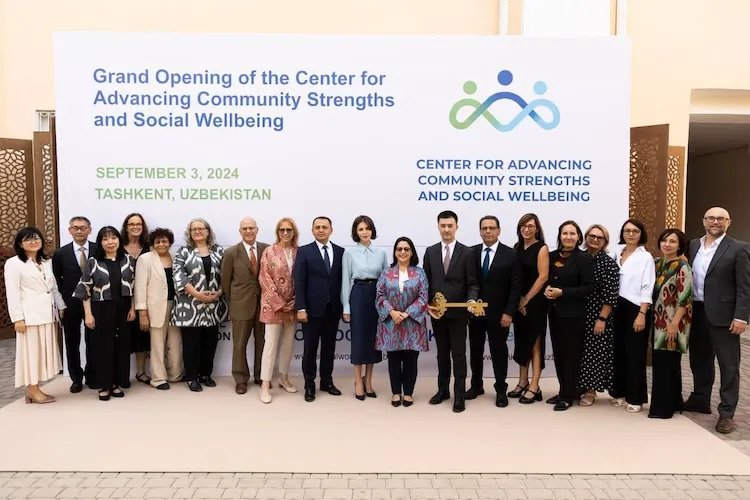
The Center's founding in 2024 was the culmination of more than two decades of sustained effort to establish social work as a recognized academic discipline and professional practice in Uzbekistan — a country where, following the Soviet period, the profession essentially did not exist.
From the early 2000s, UNICEF took a leading role in advocating for and supporting the development of social work in Uzbekistan, partnering with a dedicated National Team on Social Work Development that brought together academics, researchers, and practitioners committed to building the field from the ground up. A strategic partnership focused on child protection was launched in 2005, deepening UNICEF's engagement with the sector and following the first formal recognition of social work as a profession in Uzbekistan. Over the years, the National Team achieved meaningful milestones: the opening of the first undergraduate social work programs at Uzbekistan universities, the introduction of social worker positions within select institutions, and the gradual development of a professional identity for a field that had to be built largely from scratch. Progress was real, but uneven — the broader system remained fragmented, and the profession's growth was slow relative to the scale of social need in the country.
A significant turning point came through the USWEEP project (2018–2019), a collaboration between Columbia University's School of Social Work, UNICEF Uzbekistan, and local partners. As part of this initiative, CSSW conducted a comprehensive assessment of Uzbekistan's social protection system. The findings were sobering: social services were fragmented across 13 different ministries and organizations, each serving distinct vulnerable populations with little coordination between them, and the workforce of trained social workers and social service professionals remained critically undersized. The assessment's central recommendation was that Uzbekistan needed a dedicated government body — one that could unify service delivery, lead workforce development, and build the kind of coordinated, evidence-based system the country's most vulnerable citizens deserved.
In 2023, the National Agency for Social Protection under the President of the Republic of Uzbekistan (LINK) was established, with a mandate to develop and deliver high-quality social services to the citizens of Uzbekistan — with particular focus on children, women, families, persons with disabilities, older adults, those affected by poverty, and other groups. From its earliest days, the Agency moved with remarkable speed and purpose: more than 9,000 social workers were placed directly in mahallas — Uzbekistan's community-based neighborhood units — for early identification and prevention, and Inson multidisciplinary social service centers were established across all 208 districts of the country. The approach marked a decisive shift from the Soviet-era passive aid model to an active, biopsychosocial model prioritizing psychosocial support and community-level intervention. The Agency's leadership simultaneously sought out international expertise and best practice to ensure these reforms were grounded in global standards.
That pursuit led the Agency to Columbia — a path grounded in longstanding relationships between the leadership of CSSW's Social Intervention Group, particularly University Professor Nabila El-Bassel and Professor Louisa Gilbert, Co-Directors of SIG, and Uzbekistan-based CSSW alumni and faculty fellows who had built and sustained a connection with Columbia over many years. Among them were Lyudmila Kim, who led the National Team on Social Work Development in Uzbekistan and, working closely with SIG leadership, helped shape the vision, mission, and framework of what would eventually become the Center — and who currently serves as its Program Director at CSSW — and Diana Isaeva, now a UNICEF Child Protection Specialist, whose long collaboration with SIG contributed to the foundation of trust and shared purpose on which the partnership was built.
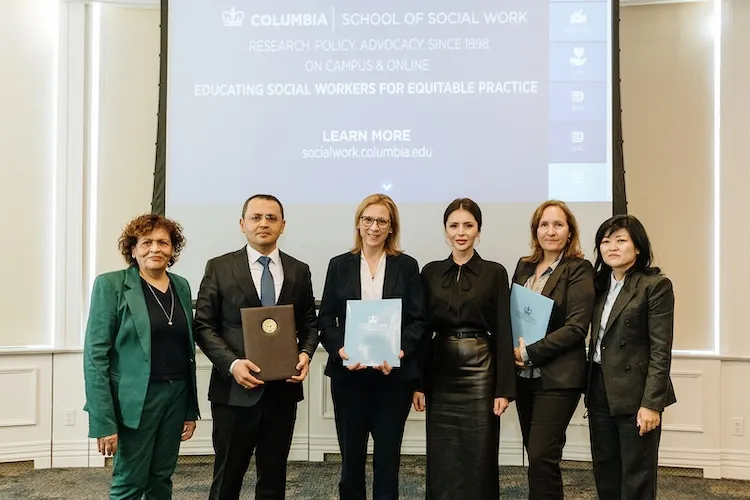
In November 2023, a high-level delegation from the National Agency for Social Protection visited Columbia University for a series of substantive exchanges with CSSW leadership and faculty. The Uzbekistan delegation was led by Mansurbek Olloyorov, Advisor to the President of Uzbekistan and Director of NASP, and included First Deputy Director Shaxnoza Shavkatovna Mirziyoyeva, Director's Advisor Yelena Ten, and other senior Agency staff. UNICEF was represented by Antonia Luedeke, Chief of Child Protection, UNICEF Uzbekistan. On the Columbia side, the delegation was received by Dean Melissa Begg, Professor of Social Work; Ana F. Abraído-Lanza, Vice Dean and Professor of Social Work; Richard T. Hara, Senior Associate Dean for MSSW Education; Brenda Jones Harden, Professor of Child and Family Welfare; Nabila El-Bassel, University Professor and Director of SIG; and Louisa Gilbert, Professor and Co-Director of SIG back then. It was during this visit that Dean Begg and First Deputy Director Mirziyoyeva, alongside their respective teams, laid the foundation for what would become the Center — a partnership that both institutions committed to with a shared sense of purpose.
The conversations were substantive — covering international models of social protection, evidence-based methodologies, and the practical challenges of building a professional social work system at national scale. By the end of the visit, all three parties — NASP, CSSW, and UNICEF — had signed a trilateral Memorandum of Understanding, establishing a formal framework for collaboration in research, education, and professional practice development.
Image Carousel with 5 slides
A carousel is a rotating set of images. Use the previous and next buttons to change the displayed slide
-
Slide 1: CCSW opening delegation meeting at Columbia School of Social Work
-
Slide 2: Opening meeting of the Center for Advancing Community Strengths and Social Wellbeing
-
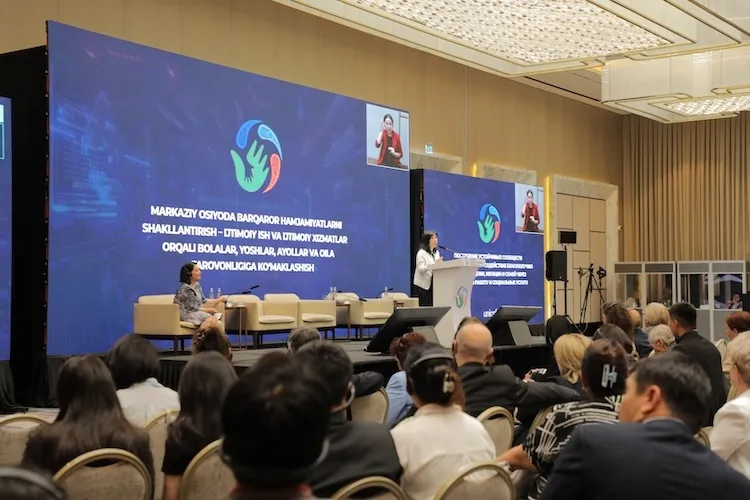
Slide 3: CSSW delegation forum in Uzbekistan
-
Slide 4: Affiliates join the CCSW opening delegation meeting
-
Slide 5: Speech given by the Columbia School of Social Work
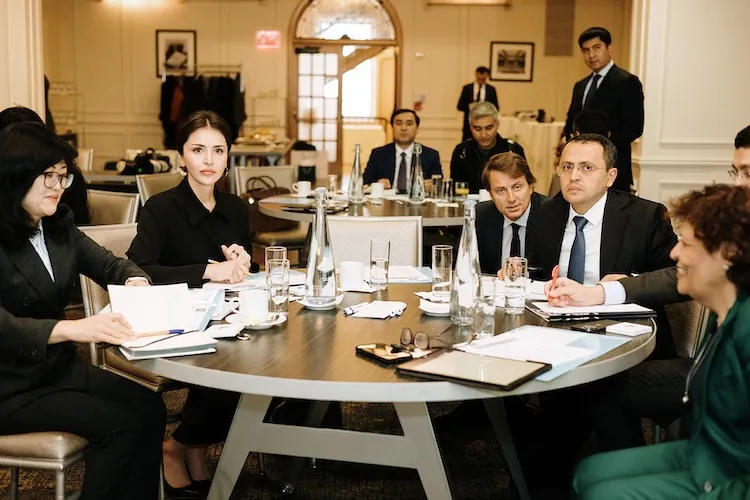
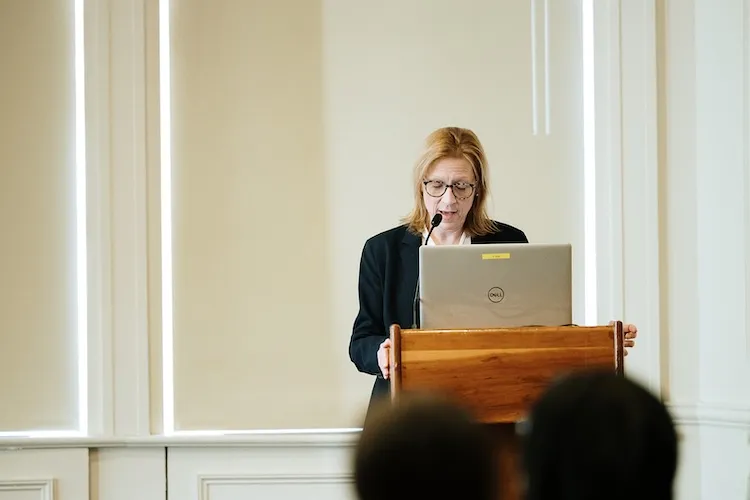
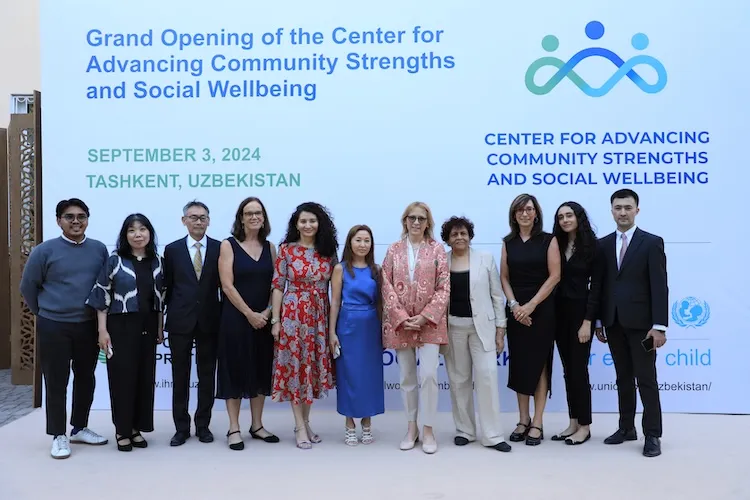
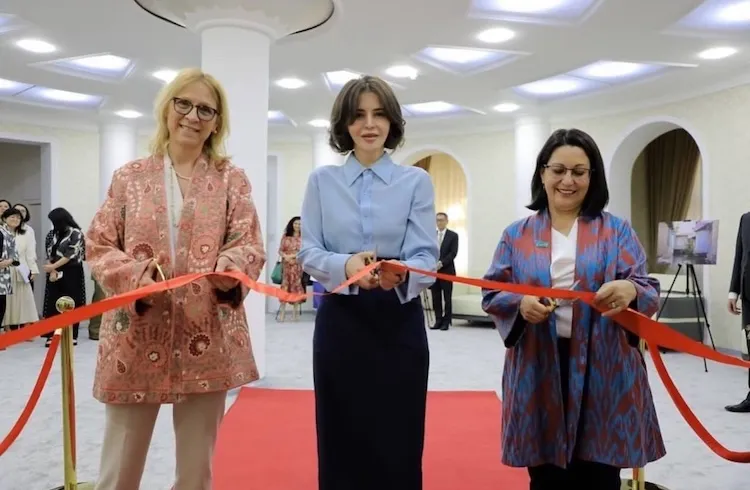
The partnership took institutional form the following year. On June 24, 2024, Resolution No. 350 of the Cabinet of Ministers of the Republic of Uzbekistan officially established the Center for Advancing Community Strengths and Social Wellbeing. The Center opened its doors in September 2024, marked by an official ceremony in Tashkent. In a moment that captured the spirit of the trilateral partnership, the Center was formally inaugurated by Dean Melissa Begg, First Deputy Director Shaxnoza Shavkatovna Mirziyoyeva, and UNICEF Uzbekistan Representative Ms. Regina Maria Castillo, who together cut the ribbon to open the Center.
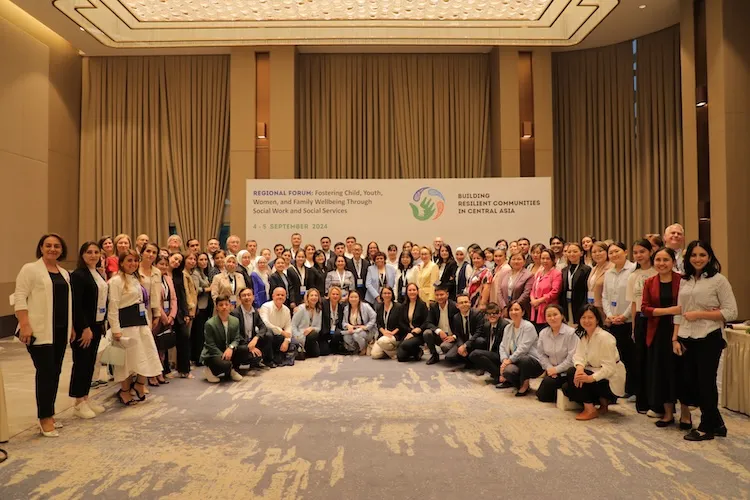
The opening ceremony was immediately followed by an international forum — "Building Resilient Communities in Central Asia: Fostering Child, Youth, Women, and Family Wellbeing Through Social Work and Social Services" — held in Tashkent on September 4–5, 2024, and co-organized by NASP, UNICEF, and CSSW. The forum brought together national and regional stakeholders to advance dialogue on social work and social services in the region, with the CSSW delegation playing a central role as keynote speakers across plenary and panel sessions.
Since opening its doors, the Center has been putting that collaboration into practice — conducting research, delivering training, and developing evidence-based programs in the field of social protection, social services, and mental health. It draws on Uzbekistan's own community traditions and indigenous approaches alongside international knowledge and best practice, integrating the two rather than substituting one for the other. Across its three interconnected directions — research, education, and practice — it contributes to how social services are designed, delivered, and continuously improved across Uzbekistan.
Image Carousel with 4 slides
A carousel is a rotating set of images. Use the previous and next buttons to change the displayed slide
-
Slide 1: The participants in the forum pose together
-
Slide 2: The CSSW delegation a the opening of the Center.
-
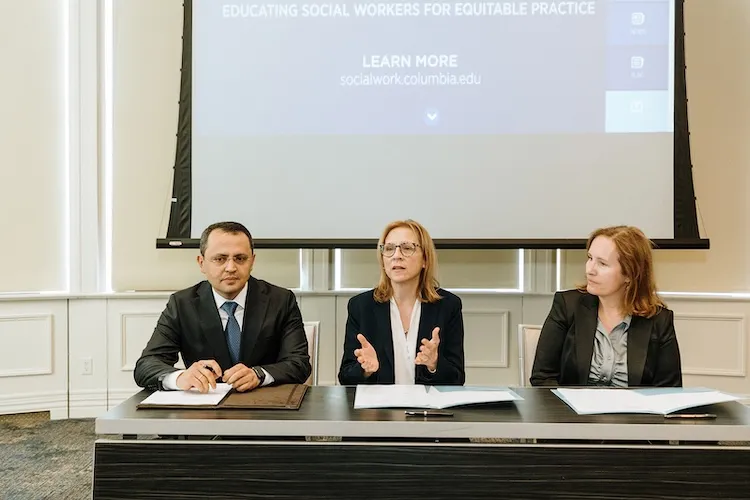
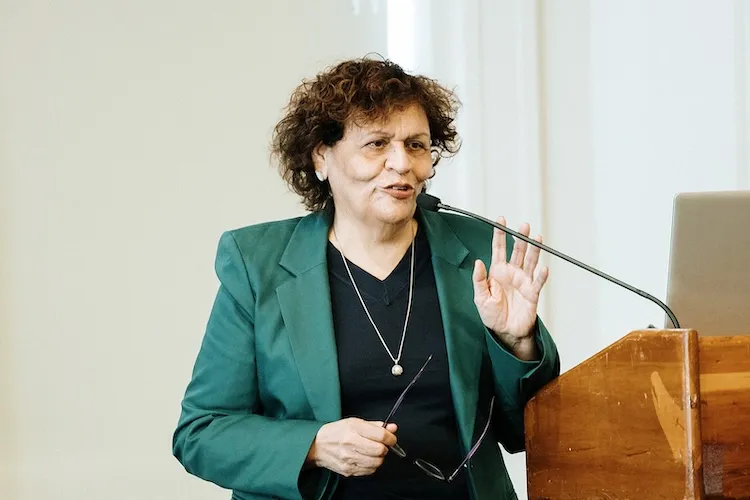
Slide 3: CCSW affiliates speak to the delegates at Columbia School of Social Work
-
Slide 4: CSSW Dean Melissa Begg; Shakhnoza Mirziyoyeva, First Deputy Director of the National Agency for Social Protection of Uzbekistan, and Regina Castillo, head of the UNICEF office in Uzbekistan cut the ribbon to open the Center